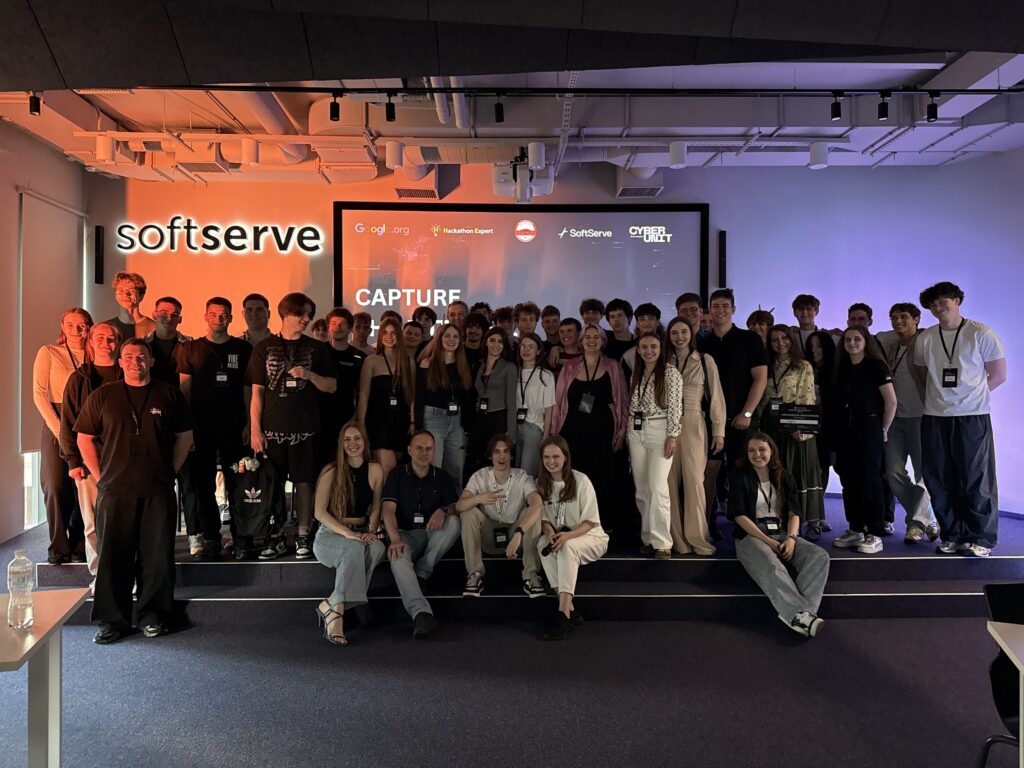
In the peaceful grounds of the Poznań campus of Adam Mickiewicz University (UAM), the mathematics and computer science faculty borders a tranquil wood. Across the road, there is a busy metre-square anthill, with large red ants scurrying around, carrying pieces of foliage far bigger than themselves. As I walked into the virtually empty building in the September sunshine, I imagined how this campus will feel in a few weeks’ time, at the start of the new semester and university year; excited new students bustling around, carrying a potential for learning and societal impact far bigger than themselves.
I was here for the UAM cybersecurity summer school, a week-long in-person event held as part of the Google.org Cybersecurity Seminars. The summer school is the culmination of a range of online workshops and activities over the previous months, testing students’ experience and aptitude for cybersecurity. As co-organizer Professor Bartosz Naskręcki explained: “interest went way beyond our expectations – our students understand that cybersecurity has become a ubiquitous issue for the global economy and society”.
As I talked to these students over the week, I saw how – like the anthill – they had all approached the summer school from their own unique path, while sharing common hopes and expectations. In response, the summer school aims to provide participants with a solid foundation in cybersecurity, preparing them for wherever their paths will take them.
One participant, Wiktor, is studying Scandinavian philology. He had previously wondered whether there is a place in the cybersecurity field for people studying humanities. During the summer school, he realized the variety of roles available and the applicability of different disciplines to cybersecurity problems. Many top threat intelligence companies have hired people from social science and humanities backgrounds because they can put incidents in their wider context. The key requirement – and a highly transferable skill – is an analytical mindset and a willingness to delve deeply into problems.
Another participant, Marta, is a graduate in administration, who wants to study national security. She initially heard about the summer school through a scientific club on AI and cybersecurity. Having learnt more this week, she is now interested in a potential career in the field.
In contrast, Maja, an applied linguistics student, had come to the summer school with no background in cybersecurity at all – but she had found the summer school pitched at exactly the right level, with introductions to technical topics alongside guest lectures putting key issues into practice.
Julian and Kamil, political science students, saw the crucial national security side of cybersecurity, especially because the summer school was held in a week of noticeable international tension. This backdrop was a constant reminder that cybersecurity is both personal and political, with cyber attacks involved in nearly all modern conflicts. They were concerned about the potential for “hybrid” or “grey zone” warfare, where belligerents seek to test the other sides’ defence through cyberspace as much as airspace.
Lukas, a computer science student, had received information about the summer school through his lectures the previous semester. He was keen to experience a more hands-on perspective than his regular courses, which are comparatively theoretical; for example, learning the underlying maths behind hash functions rather than how hash functions contribute to a wide variety of cybersecurity protective measures. He was also excited to complement his technical education by understanding the crucial legal aspects of cybersecurity.
Alex had come to the summer school after realising that their own personal information was available online. They realised that they needed to know more about how individual data is acquired and used by malicious cyber actors, and how they can better protect themself against the very real impact of such data theft.
Overall, participants were equally excited about the personal and professional benefits of the summer school – they saw it as a fun way to help secure themselves in the modern digital world and prepare for careers either in cybersecurity itself or where cybersecurity knowledge is crucial. Like its adjacent anthill, the benefits of the summer school also spread beyond its inhabitants to the wider community. Professor Naskręcki concludes that “the summer school also enhanced the qualifications of our staff, strengthening the cybersecurity skills of the university more widely.”