Student Projects
Graduate students from around the world spent five intensive days in Amsterdam building practical ransomware-defence resources for Local Community Organizations — municipalities, non-profits and SMEs that keep communities running with limited security capacity.


Built by students
Free for communities
Each project is published openly so municipalities, non-profits and small businesses can use and adapt it at no cost. Each project is published openly so municipalities, non-profits and small businesses can use and adapt it at no cost.
Turning research into resources
Working in teams, students applied what they learned to projects designed to help LCOs strengthen their ransomware defences. The projects explored different aspects of ransomware preparedness and response, from vulnerability scanning and open-source intelligence to incident-response planning, awareness tools and analysis of the ransomware ecosystem.
The aim was to translate research and technical knowledge into resources that organizations can understand, use and build upon.
Seven teams, seven approaches
This portal brings the student projects together in one place. It provides an overview of the different approaches developed during the Bootcamp and introduces the teams behind them.
Together, the projects demonstrate how technical expertise, policy thinking and accessible communication can help organizations better understand ransomware risks and take action to reduce them.
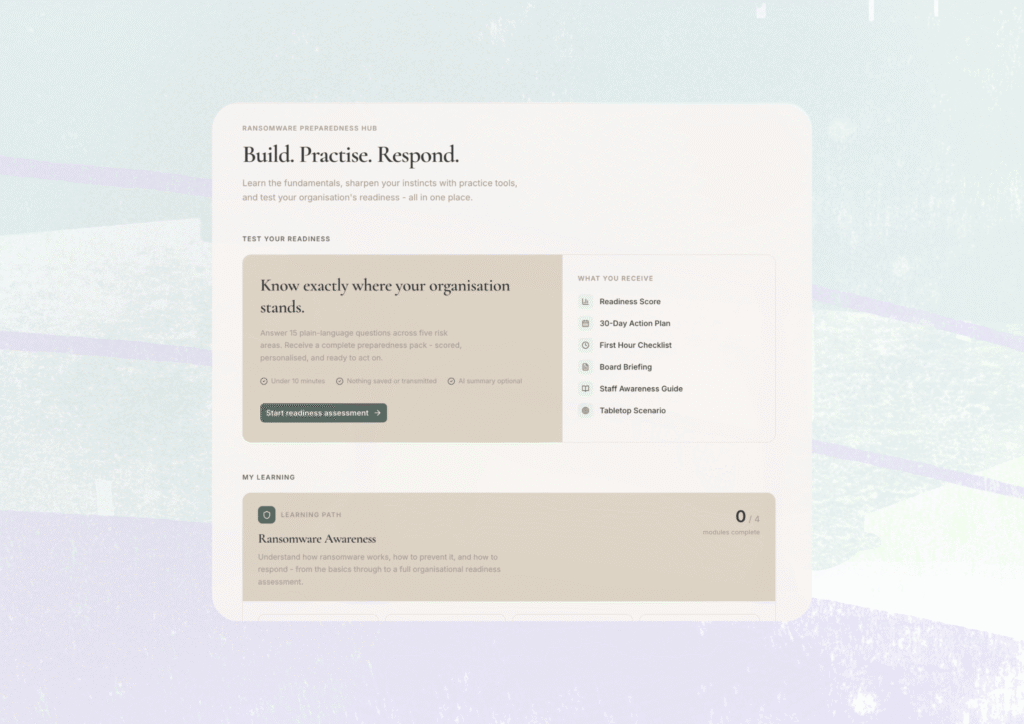
RansomReady: Ransomware Awareness Tool
Read more
Called ‘RansomReady,’ the tool is an AI-enhanced ransomware preparedness platform which helps organizations assess cyber resilience. Instead of generic advice, the tool provides tailored guidance for specific operating environments. RansomReady combines a readiness assessment, structured learning modules, and interactive practice tools within a single browser-based experience accessible to non-technical teams. The goal is not a ‘one-size-fits-all’ solution. Instead, after assessments across risk areas, each organization receives a tailored preparedness pack. The personalisation is based on sector, size, score, and category-level results. Using LLM-assisted tools, these recommendations best meet organizations’ profiles and maturity levels. RansomReady can also generate customised executive-level summaries which translate technical results into clear communication for organisational leadership. This is paired with a 30-day action plan, a first-hour incident checklist, awareness guidance, and exercise material (e.g., practice games).
In sum, RansomReady combines transparent, rule-based scoring with AI-driven personalisation to help organizations understand risks and prioritise the right steps to reduce them before an incident occurs.
Luca Tortoriello · Emmanuel Atwam · Gustavo Ferreira de Lima · Erika Oliveri · Nicole Bovolenta
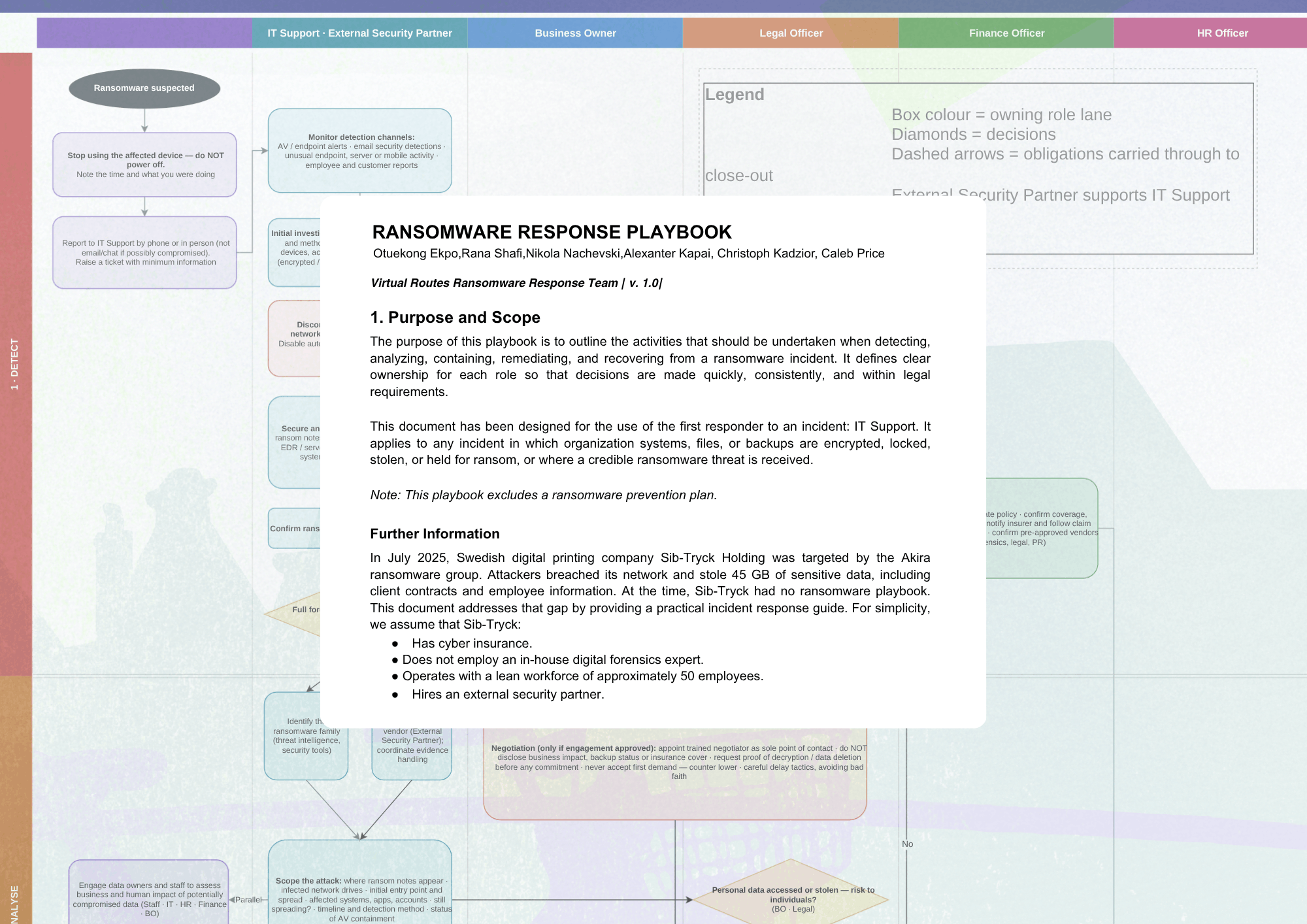
Ransomware Response Playbook
Read more
It helps organizations make informed decisions during and after an incident without an in-house digital forensics team. Working with a recent case study (the Akira ransomware attack on Sib-Tryck Holding in 2025), the playbook guides an organization through the process of responding to a ransomware attack. It covers steps for detecting, analysing, containing, remediating, and recovering from a ransomware incident. The playbook further provides role-by-role checklists, guidance on ransom negotiations and payment decisions, requirements for data breach reporting, and steps to contain threats. This includes, for instance, isolating networks, resetting credentials, or removing malware.
In sum, the Ransomware Response Playbook offers vital guidance for situations in which time is limited, responsibilities may be unclear, and coordinated action is essential.
Ransomware Negotiation Simulation Chatbot
Read more
Engaging with the chatbot, these organizations can learn, test, and gain hands-on insight into ransomware threats and negotiation scenarios. The chatbot exposes them to challenging decisions which they may face if they become victims of a ransomware attack. Using publicly available and ethically sourced data, the provided scenarios are based on existing ransomware negotiation transcripts (sources include Casualtek & Ransomchats archive). The chatbot also includes an ‘expert mode’ which helps interpret and rationalise response outcomes. Additionally, a performance score gives feedback on how effectively an organisation managed a simulated incident. By combining preparation with guidance, the chatbot explains how attackers might respond to different strategies.
In brief, the ransomware negotiation simulation chatbot helps users understand and make verified, coordinated decisions under pressure.
Elisabeth Postigo Leoni · Sara Lilli · Maria Vittoria Zucca · Ellie Carter · Karoline Bjørvik Kulsveen · Sali Khalil
OSINT Guide
Read more
Azra Ocak · Elena Schörling · Parto Afshari · Ioannis Biternas · Marlene Flintrop · Quitterie Jacheet
DIANA: Vulnerability Scanning Pipeline
Read more
DIANA carefully translates every finding into plain language which, for instance, a non-technical charity organization can engage with and act on. Focusing on the Dutch local community ecosystem, this includes ‘ready-to-send’ fix emails in Dutch. The tool is innovatively built on the CERT-PL Artemis engine, with a custom detection module and a consent-first, responsible-scanning framework.
In short, the vulnerability-scanning tool translates highly technical findings into clear, actionable recommendations.
SafetyRoutes: Vulnerability Scanning Pipeline
Read more
Kelly T. · Florance de Valk · Perikles Panagouleas · Razan Ayoub
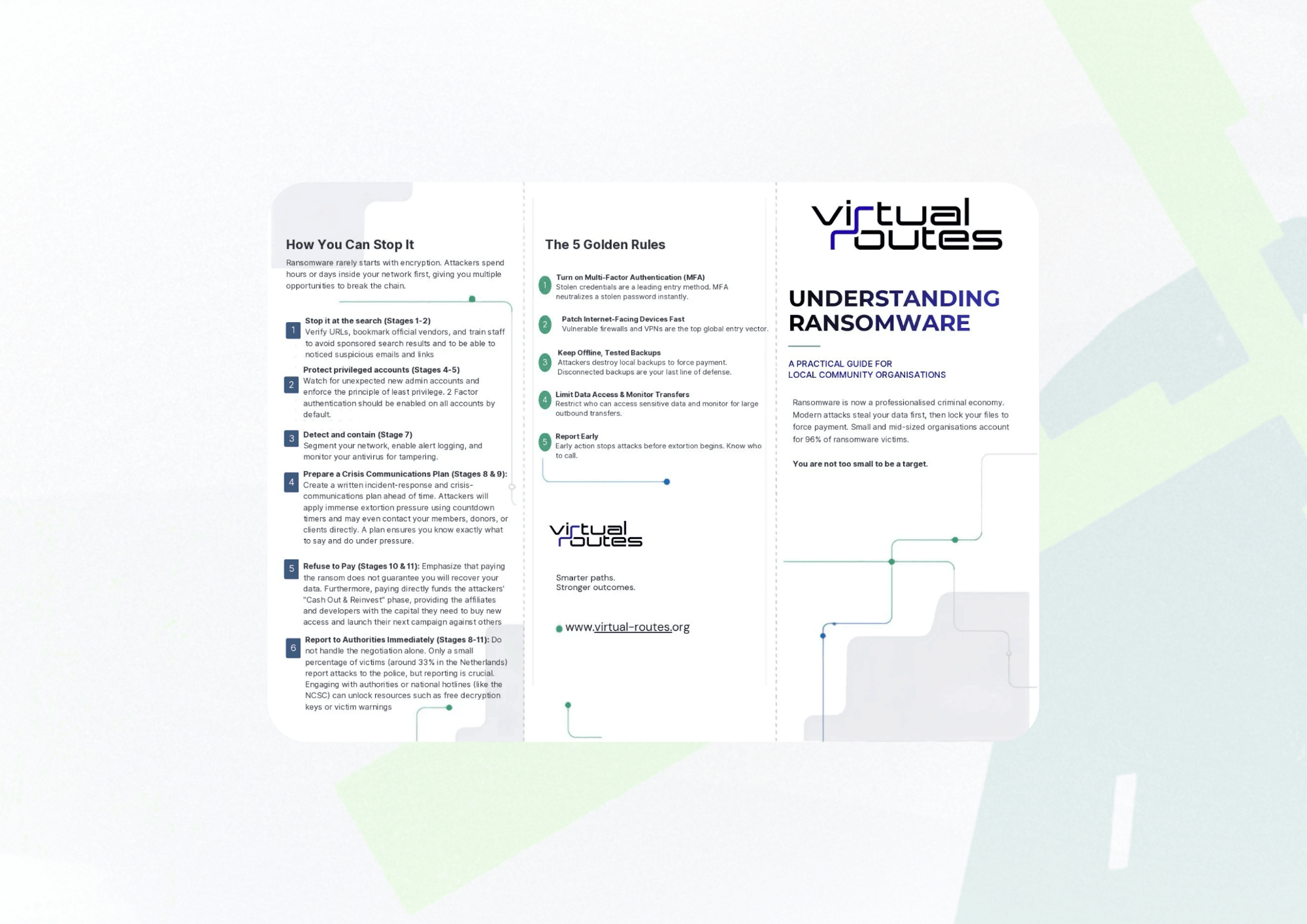
Ransomware Ecosystem Analysis Tool
Read more
Christopher Nyandoro · Amira Fathalla · Naveen Chandra Joshi · Mia Bauza Mas
Please note
These projects were created by students during the Ransomware Defence Summer Bootcamp and are hosted independently by the teams themselves. Virtual Routes does not endorse the projects and takes no responsibility for their accuracy, functionality, security or any other aspect of them. Please review and test anything you use before relying on it in your own organization.
