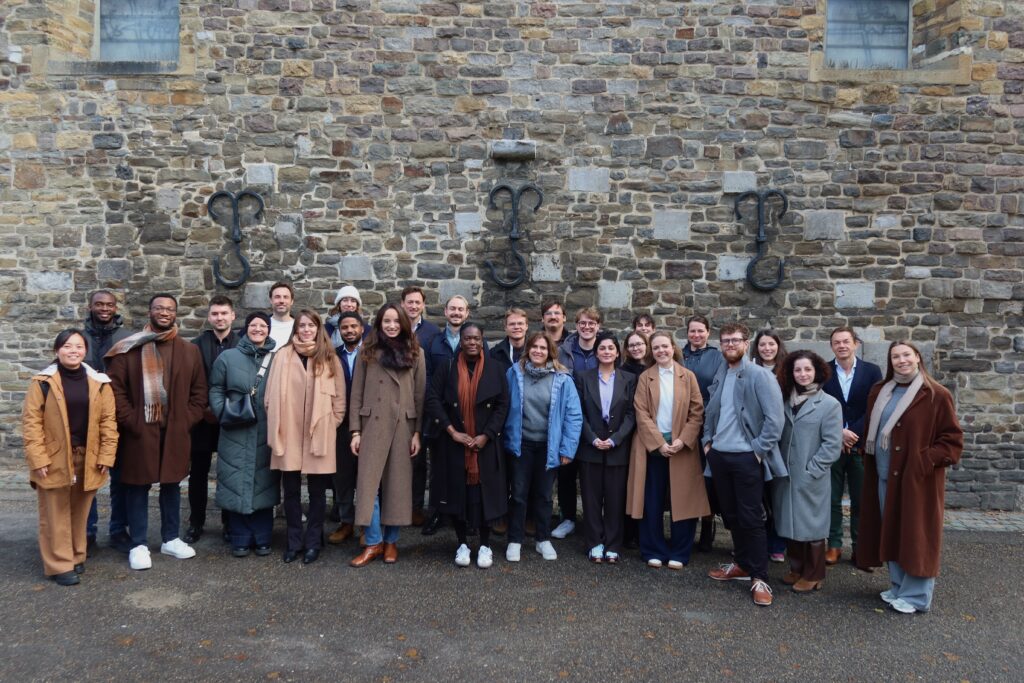
Last week, the 2026 cohort of the European Cybersecurity PhD Accelerator met in Maastricht. This in-person part of the Accelerator program combined social events, research presentations, and engagement with policy experts.
After welcome drinks on Wednesday evening, participating early-career scholars discussed their broader research progress and specific methodological, theoretical, and empirical contributions of each PhD on Thursday. The Co-Directors of Virtual Routes, Max Smeets and James Shires, kicked off the conversation by guiding the PhD researchers through two interactive sessions.
The challenges of cybersecurity research
The first session focused on overcoming common obstacles during a cybersecurity-related PhD. Law, history, computer science, political science, and geography were just some of the many disciplines in which the PhD researchers working on cybersecurity are embedded. It is hardly surprising that these individuals find themselves constantly challenged to navigate disciplinary boundaries. Indeed, this was a key recurring theme raised by several scholars.
”The challenges of cybersecurity transcend borders and disciplines, and so should the conversations about how to address them. Virtual Routes built a retreat exactly around this. I left with a wealth of new ideas.” – Karen De Vos, PhD Researcher at KU Leuven
Interdisciplinary research has many benefits. Just think of the ability to identify recurring patterns across fields and the related potential for innovation. However, first- and second-year PhD researchers working on cybersecurity often have few opportunities to engage with relevant peers, especially outside their university environment. The same tends to apply to opportunities for exchange with the policy and practitioner communities shaping this field.
The value of doing a PhD
This initial discussion of challenges was followed by a conversation about the value of doing a PhD in cybersecurity in the age of AI. Participants reflected on their initial incentives for pursuing doctoral studies and their future ambitions in academia or beyond. A surprisingly small number of researchers were fully set on pursuing a traditional academic career path, underscoring the importance of interacting with policymakers and practitioners.
Not only did I receive invaluable feedback on my PhD, feeling part of a community of cybersecurity researchers was very validating. – Callum Harvey, PhD Researcher at the University of Oxford (OII)
After lunch, the cohort split into two groups of researchers working on a range of different cybersecurity-related topics. This provided a dedicated space for each participant to present their ongoing PhD research and receive tailored feedback. All presentations followed a clear structure of: working title, research question(s), the literature gap this addresses, and why this is relevant to real-world practice. Later that day, the early-career scholars had plenty of time to continue their discussions over a group dinner.
Engaging with policy experts
Friday offered dedicated opportunities to interact with policymakers. We kicked the day off with a breakfast session led by Jasmin Stadler, a Security Manager at a large private company. She shared insights into her fascinating career path in cybersecurity and threat intelligence, starting with her interest in the topic during her graduate studies at the University of Oxford and her different professional roles across the public and private sectors since.
After breakfast, the cohort of PhD researchers engaged in an interactive discussion on emerging cybersecurity policy challenges with a general in the Dutch Armed Forces and Professor at the University of Amsterdam and the Netherlands Defence Academy, Peter Pijpers, and a career diplomat serving as Team Lead Cyber in the Dutch Ministry of Foreign Affairs’ Security Policy Department, Pieter van den Berg.
Both pointed out untapped opportunities for mutually beneficial engagement between academic research and cybersecurity policymaking. One topic the speakers spent substantial time on was the private sector’s unique role vis-à-vis the state in governing cybersecurity and AI. For instance, when discussing European digital sovereignty and the promises and pitfalls of bold strategic approaches like “Euromaxxing”, experts stressed the need to address asymmetrical interdependence in cybersecurity.
Three takeaways from the retreat
- While the saying goes that the best PhD is a finished one, the PhD journey itself is full of often unexpected turns for most early-career researchers. Falling in love with teaching, for instance, changing topics, or discovering new methods. It’s really about finding the right balance between intellectual openness, on the one hand, and focus, on the other.
- Coming together in person makes the difference. Virtual sessions are unquestionably useful for regularly convening a cohort of PhD researchers based at universities across Europe. But it’s the small chats between sessions and while waiting in line at the coffee machine that often lead to the most intriguing discussions.
- Doing a PhD on cybersecurity-related topics challenges early-career researchers to navigate a rapidly changing field. Especially in the age of AI, this can feel overwhelming. But it also underscores the importance of engaging with policymakers and practitioners. This interaction can unlock new empirical insights and, at the same time, help inform better policymaking through in-depth research.
What’s next?
The retreat in Maastricht highlighted the timely need for dedicated support systems, mentorship, and resources for early-career researchers working on cybersecurity topics. With the European PhD Cybersecurity Accelerator, Virtual Routes contributes to this by bringing together a cohort of 30 outstanding early-career researchers from across Europe, helping them strengthen their research and professional skills and build lasting international networks.
The European Cybersecurity PhD Accelerator is part of the Google.org Cybersecurity Seminars Program. Details on funding, all selected PhD researchers, and the program can be found here.