Graduate students from around the world have developed seven practical resources to help local community organizations prepare for and respond to ransomware attacks. The resources were created during Virtual Routes’ first Ransomware Defence Summer Bootcamp, held at Amsterdam Business School as part of the Google.org Cybersecurity Seminars program, and are now freely available through our website.
Municipalities, non-profits and small and medium-sized enterprises provide essential services to their communities, but often have limited cybersecurity budgets and expertise. A ransomware attack can disrupt those services and leave organizations facing difficult decisions with little support. The bootcamp was designed to help students understand these challenges and develop practical ways to address them.
The week-long program combined lectures and workshops with guided project work. Students explored the technical, analytical and policy dimensions of ransomware, learning how to detect threats, respond to incidents, reduce risks and communicate effectively with affected organizations.
Working in seven teams of four to six students then put that learning into practice. Each team developed a resource addressing a specific aspect of ransomware preparedness or response, with a focus on the needs and capacity of local community organizations.
“It was brilliant to see just how quickly our students managed to collaborate in teams and turn their brand new learnings around a thorny issue like ransomware into ready-to-use resources, including elaborate website interfaces, business plans, and communications strategies,” said Hannah-Sophie Weber, Research and Project Officer at Virtual Routes.
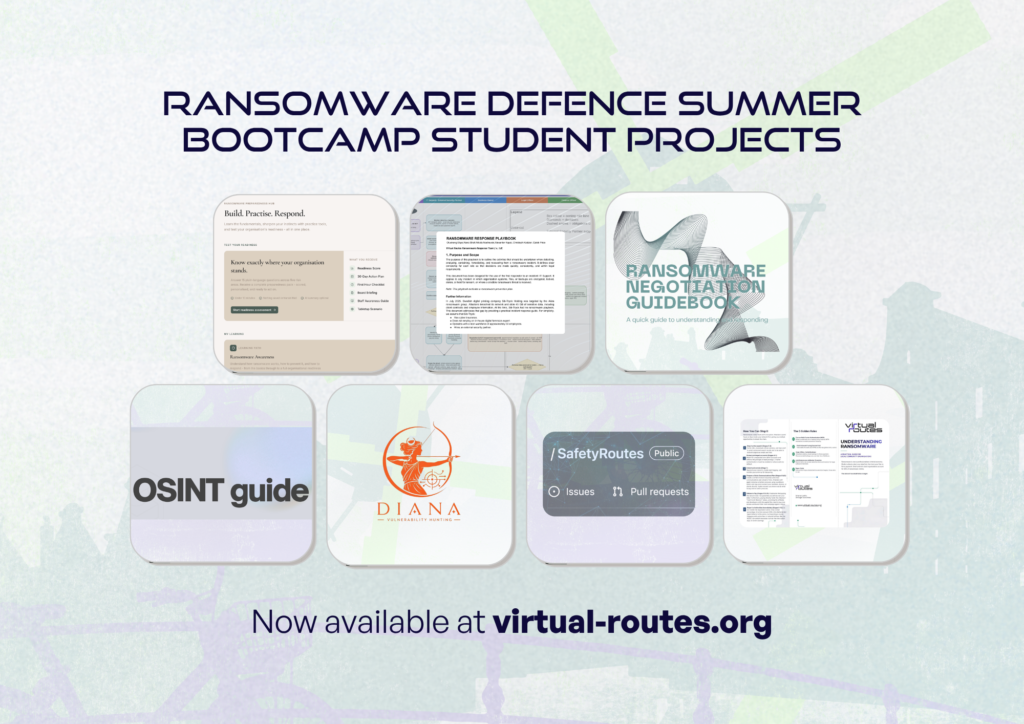
The seven student projects are:
- RansomReady: A ransomware awareness tool that helps organizations assess their preparedness and identify steps to improve it.
- Ransomware Response Playbook: A practical guide to detecting, containing and recovering from a ransomware attack.
- Ransomware Negotiation Simulation Chatbot: An interactive tool for exploring ransomware negotiation scenarios and practising decisions under pressure.
- OSINT Guide: An introduction to open-source intelligence, helping organizations understand what publicly available information can reveal about them following a ransomware attack.
- DIANA: A vulnerability scanning tool that translates technical findings into clear recommendations.
- SafetyRoutes: A vulnerability scanning tool that checks websites for weaknesses, explains how to address them and follows up on fixes.
- Ransomware Ecosystem Analysis Tool: A research resource that explains ransomware trends, groups and attack techniques, with practical implications for local organizations.
Explore all seven student projects and access the resources for free on our website here.