Virtual Routes are proud to have contributed to the recent Google.org Impact Summit, held in early June in London, UK. As the first Impact Summit held outside the US, this event had a special focus on technology philanthropy in Europe, the Middle East, and Africa (EMEA)
The morning was full of inspirational presentations from projects tackling diverse social challenges through technology. These impressive initiatives ranged from preserving at-risk languages by providing a minimum income for AI training, to facilitating the use of bio-based plastic alternatives in commercial packaging. Many presentations focused on knowledge, skills and learning, including a digital assistant for technology education in Romania and classroom resources for AI upskilling in under-served communities.
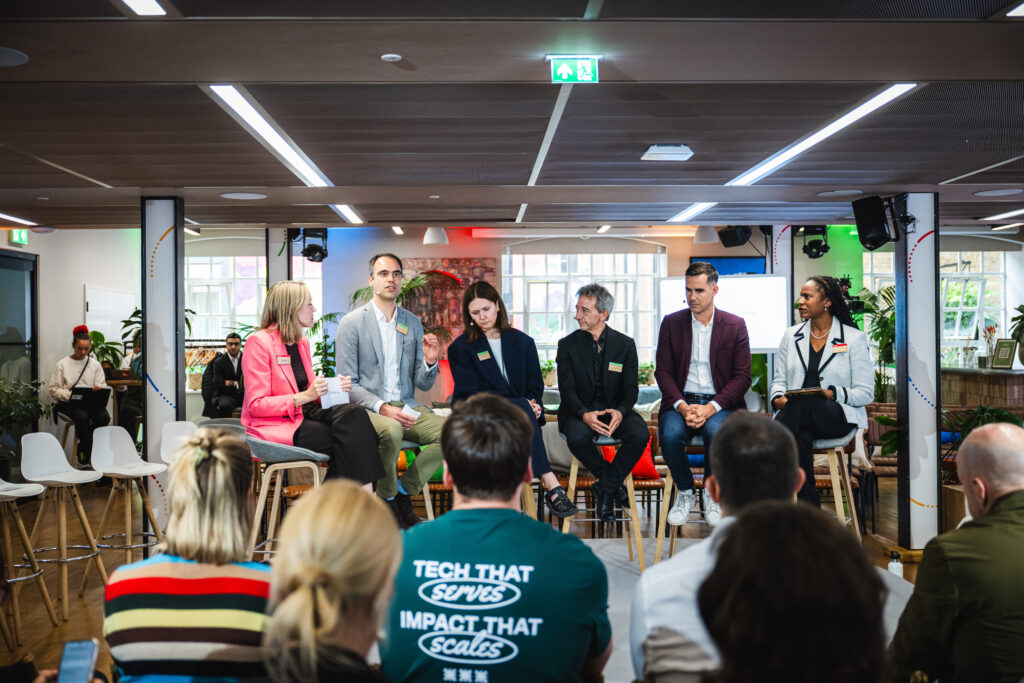
In the afternoon, Virtual Routes Co-Director Dr James Shires participated in a wide-ranging and insightful panel discussion chaired by Liza Ateh, Head of Economic Opportunity for Google.org EMEA. The panel also featured Shanika Hope, Director of Knowledge, Skills and Learning at Google.org; Zane Čulkstēna, founder of ERDA and the Future of Work Institute; Andrea Renda, Director of Research at the Centre for European Policy Studies; and Nicolas Hazard, founder of INCO. The discussion explored the many challenges in adapting European educational structures to an AI era, from schools to universities, and from microcredentials to continued professional education.
Dr Shires’ remarks focused on the current state of cybersecurity education, especially in Europe. A recent ISC2 report highlights a shift in priorities and values for the cybersecurity workforce, with 43% of those in Europe seeking to “balance personal fulfilment and professional growth”. This suggests that, in an era when cybersecurity analysts are increasingly being asked to integrate AI more efficiently into their workflows, there remains an overriding desire for a sense of mission and purpose.
The same report provided fascinating insights into the extent to which standard educational pathways prepare individuals for cybersecurity careers. Internships and apprenticeships were rated more highly by survey respondents for enabling cybersecurity career growth than bachelor or advanced degrees in cybersecurity or a related field, but these practical forms of experience were in turn outscored by cybersecurity certifications and previous IT employment.
We can draw two conclusions from these responses. First, cybersecurity remains ultimately a hands-on field, where experience with particular tools and situations is the most valuable medium for learning. Second, standardization of educational quality is more important than length. Well-designed shot courses, especially with industry involvement in development and assessment, can be more effective career preparation than traditional, degree-style formats.
Ultimately, adapting cybersecurity education to the AI age forces us to rethink how and when education is structured, integrating practical experience with solid foundations that will last beyond a particular toolset or analytical approach that is likely to be quickly eclipsed by the pace of technological change. Such education must also be scalable, reaching far beyond standard centres of learning to reach under-represented and diverse communities with much to offer the cybersecurity profession.