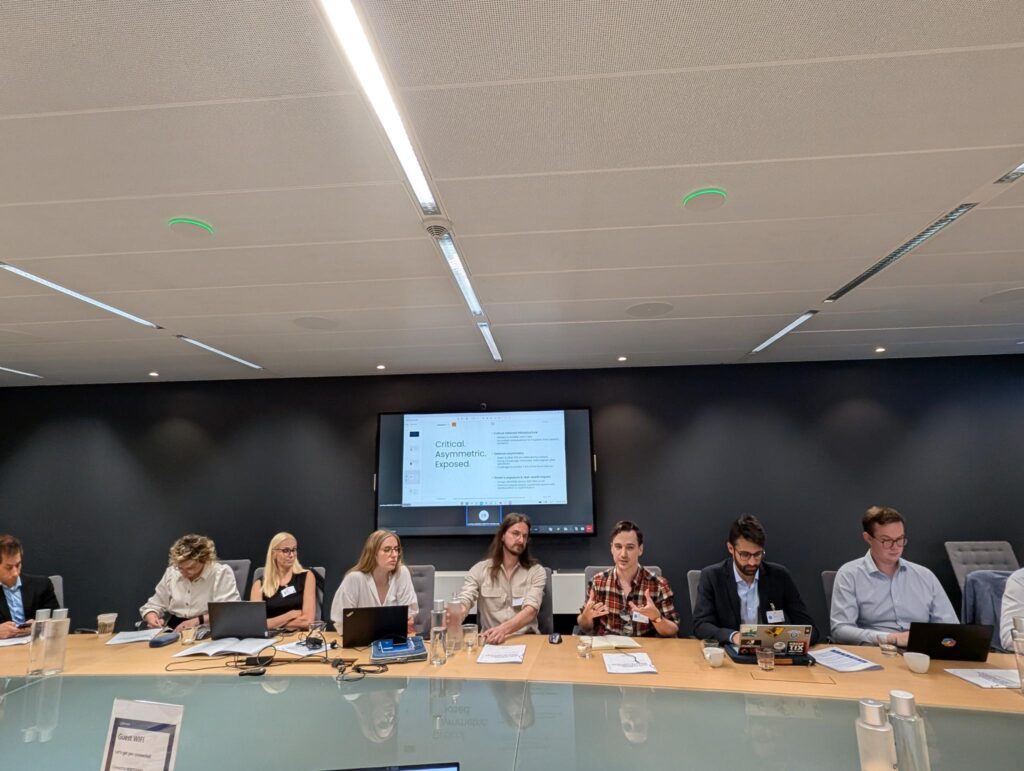
On June 17, Virtual Routes hosted a roundtable in Brussels, bringing together cybersecurity and policy experts from the public and private sectors to discuss challenges and policy issues in the water sector.
Following opening remarks by Jeremy Rollison, Senior Director and Head of EU Policy and European Government Affairs at Microsoft, the Virtual Routes team presented its newly released report: Under Pressure: Securing Europe’s Resource-Constrained Critical Infrastructure. Co-authored by Max Smeets, Gijs van Loon, James Shires, and Apolline Rolland, the report highlights which parts of Europe’s critical infrastructure are most in need of targeted cybersecurity support and outlines what forms of assistance would be most effective. It identifies the drinking water and wastewater sectors as key areas of concern: underfunded, under-resourced, and increasingly vulnerable to cyber threats due to limited investments and low cybersecurity maturity.
The first session, led by Jos Wetzels (Midnight Blue) and Ric Derbyshire (Orange Cyberdefense), sparked a discussion on key cybersecurity challenges in the water sector. While highly publicised threats like water poisoning are unlikely, the more immediate and likely threat comes from ransomware attacks by criminal groups. These attacks have disrupted operations and imposed significant recovery costs on water utilities. Participants pointed to several underlying issues that make the sector vulnerable: a lack of in-house cybersecurity expertise, insufficient mechanisms for secure information sharing, and a persistent gap between operational technology (OT) and IT environments.
In the second session, participants explored how to turn insight into action, focusing on four key policy recommendations from the report:
- Launch an EU water-cyber hygiene accelerator
- Establish a European water sector ISAC
- Integrate cyber risk into environmental and public health governance
- Use political and diplomatic tools to deter malicious activity
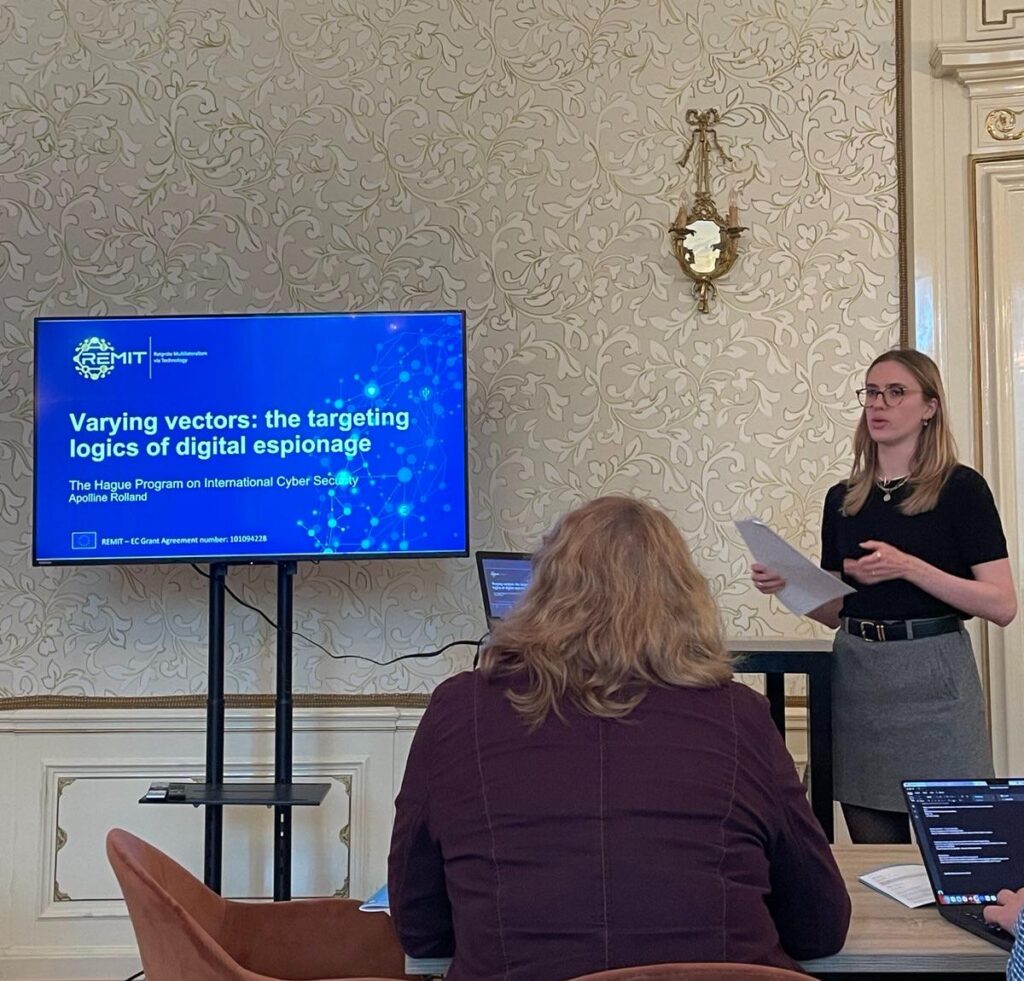
As Apolline Rolland from Virtual Routes noted, “The drinking water and wastewater sectors are the quiet front lines of Europe’s cybersecurity challenge. This roundtable helped surface concrete steps to better protect these essential services – and to move from awareness to action.”
This event was sponsored by Microsoft.