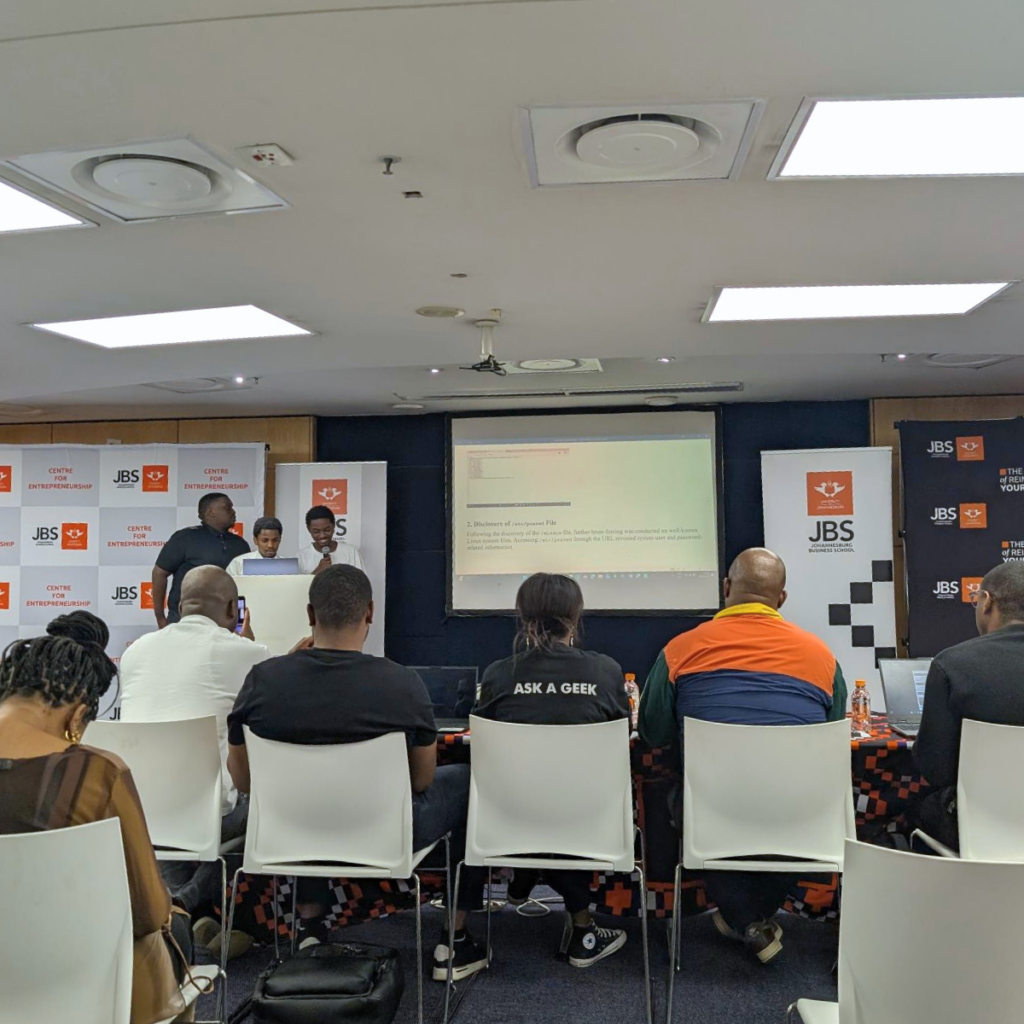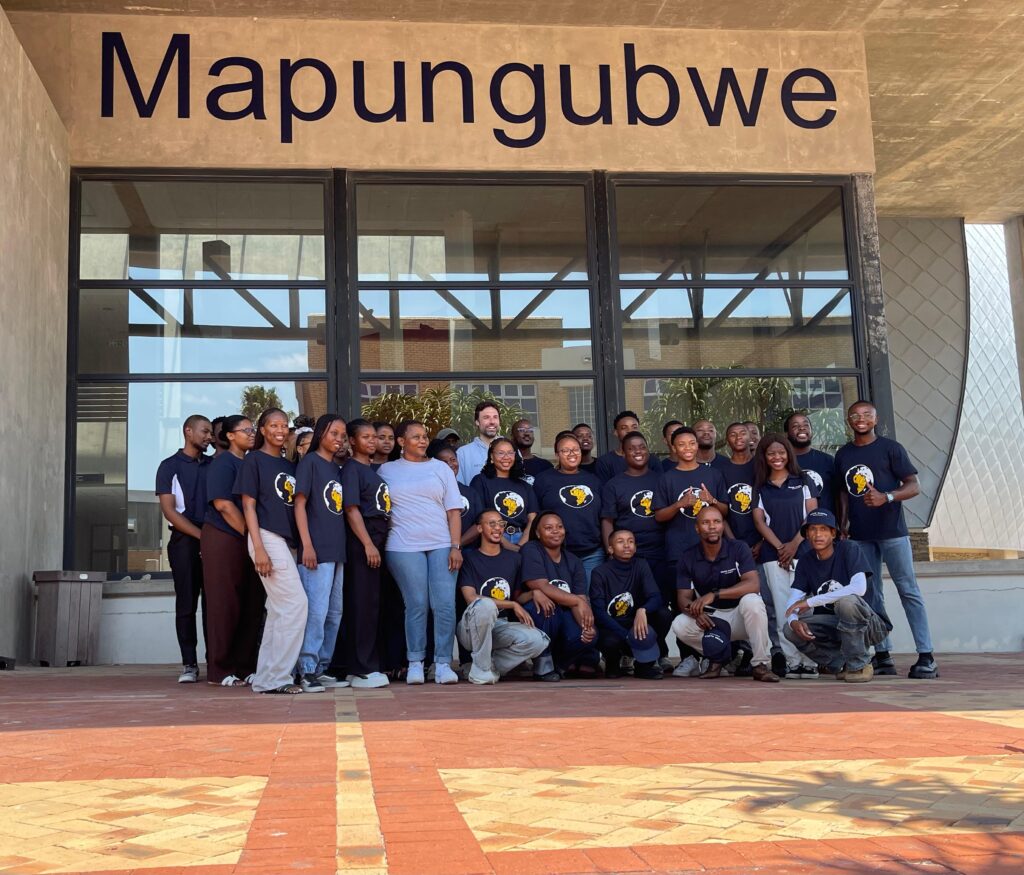
At our recent Google.org Cybersecurity Seminars gathering in Paris, we asked participating universities and training partners to reflect on their experiences from the first year of running the programme. The aim was to understand which activities resonate most with students, and how attitudes toward AI and engagement with local community organisations (LCOs) are evolving. The responses offer an early snapshot of the programme’s reach across very different contexts.
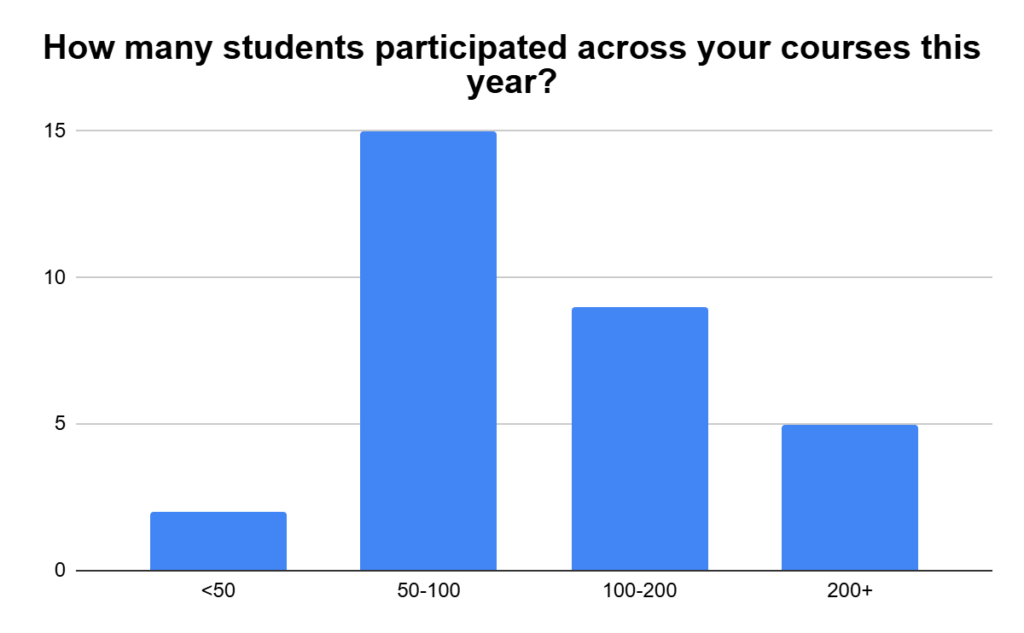
Participation numbers varied widely, but not only because this is a new initiative. The programme is intentionally designed to operate across a diverse set of environments – urban and rural institutions, large public universities, smaller technical colleges, and partners spread across Europe, the Middle East, and South Africa. Some universities taught fewer than 50 students, others between 50 and 100, and several reached over 100 or even 200 participants. The disciplinary mix was dominated by computer science and engineering, but partners also reported interest from law, international relations, and other fields, showing how cybersecurity has firmly moved beyond its traditional academic boundaries.
When asked about their most successful activities, partners highlighted a striking variety. Alongside hackathons, capture-the-flag competitions, summer schools, and hands-on labs, several pointed to high-impact community-focused initiatives – cyber awareness training for kids, workshops in elderly homes, cybersecurity sessions for librarians, testing exercises for small businesses, student-run security operations centres (SOCs), and programmes centred on GDPR or disinformation. Many emphasised that one of the most valuable outcomes was the sense of community created around these activities, particularly when students worked together on practical challenges.
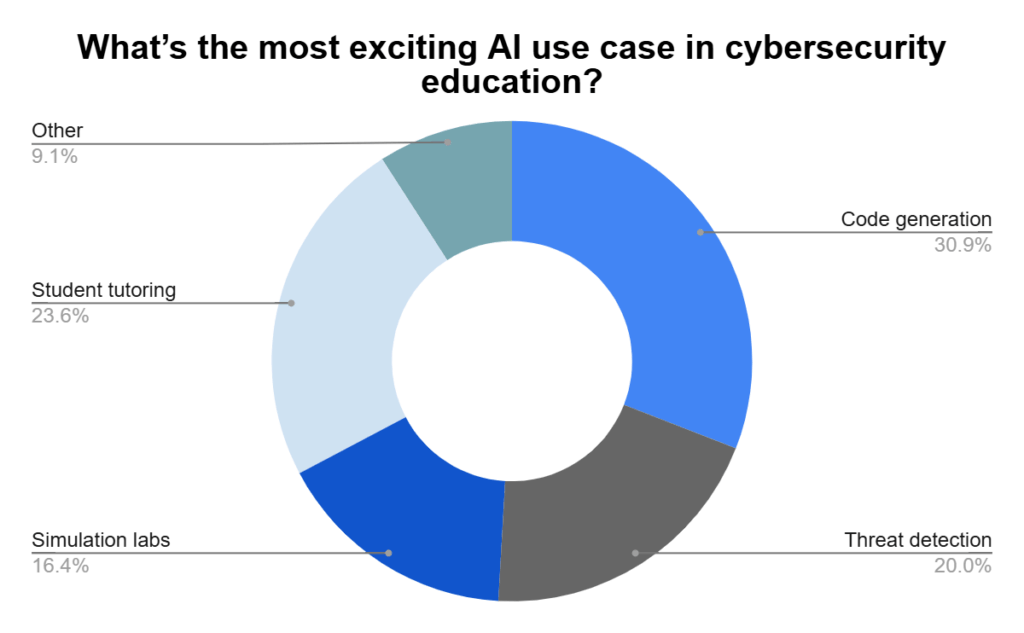
We also explored how instructors view the growing role of AI in their teaching. A majority expressed optimism, though often accompanied by a measure of caution. Interest in specific applications ranged from code generation and threat detection to student tutoring and simulation labs. Among students, curiosity was strongest around AI attacks and defence, well ahead of topics such as regulation, ethics, bias, or disinformation. Even in this first cycle, AI is already shaping how cybersecurity is being taught and discussed – and our new AI in Cybersecurity toolkit is designed to help participating universities take this further.
The LCO component – where students apply their skills to support local organisations – generated some of the clearest insights. University partners consistently described local ecosystems where interest in cybersecurity is high but capacity remains limited. Many organisations are eager to learn yet struggle with time, budget, or internal expertise. Preparedness varies considerably, and several institutions have already faced incidents that were never publicised. At the same time, demand for foundational guidance is growing rapidly, especially among SMEs, public servants, high schools, and youth groups. For many respondents, the LCO engagements demonstrated a genuine two-way benefit: organisations receive support they lack, while students gain real-world experience that reinforces their training.
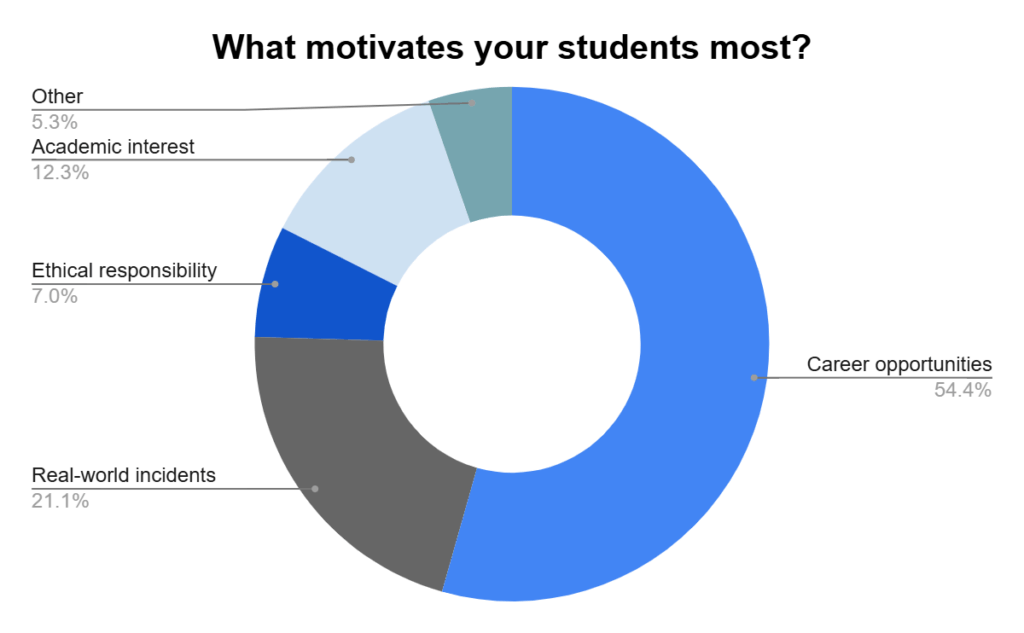
Finally, we asked what motivates students to participate. The answer was straightforward: career opportunities are the strongest driver. Exposure to real-world incidents also plays a major role, followed by academic interest and, for a smaller group, ethical responsibility. These motivations underscore why practical engagement – both in the classroom and with local communities – matters so much.