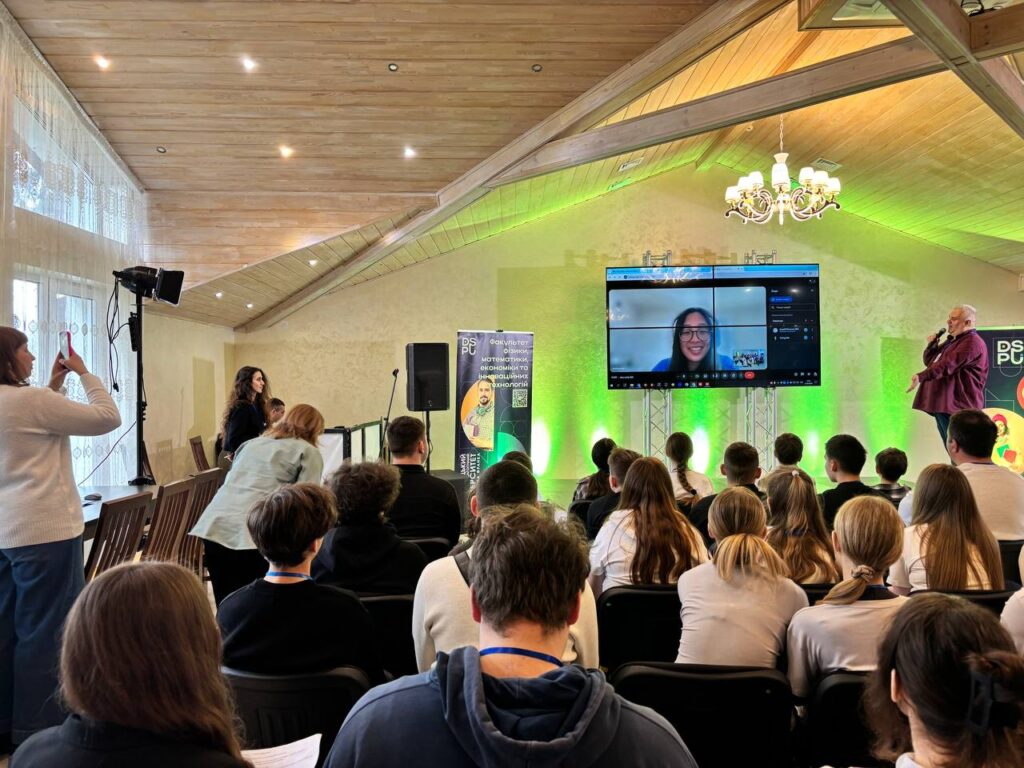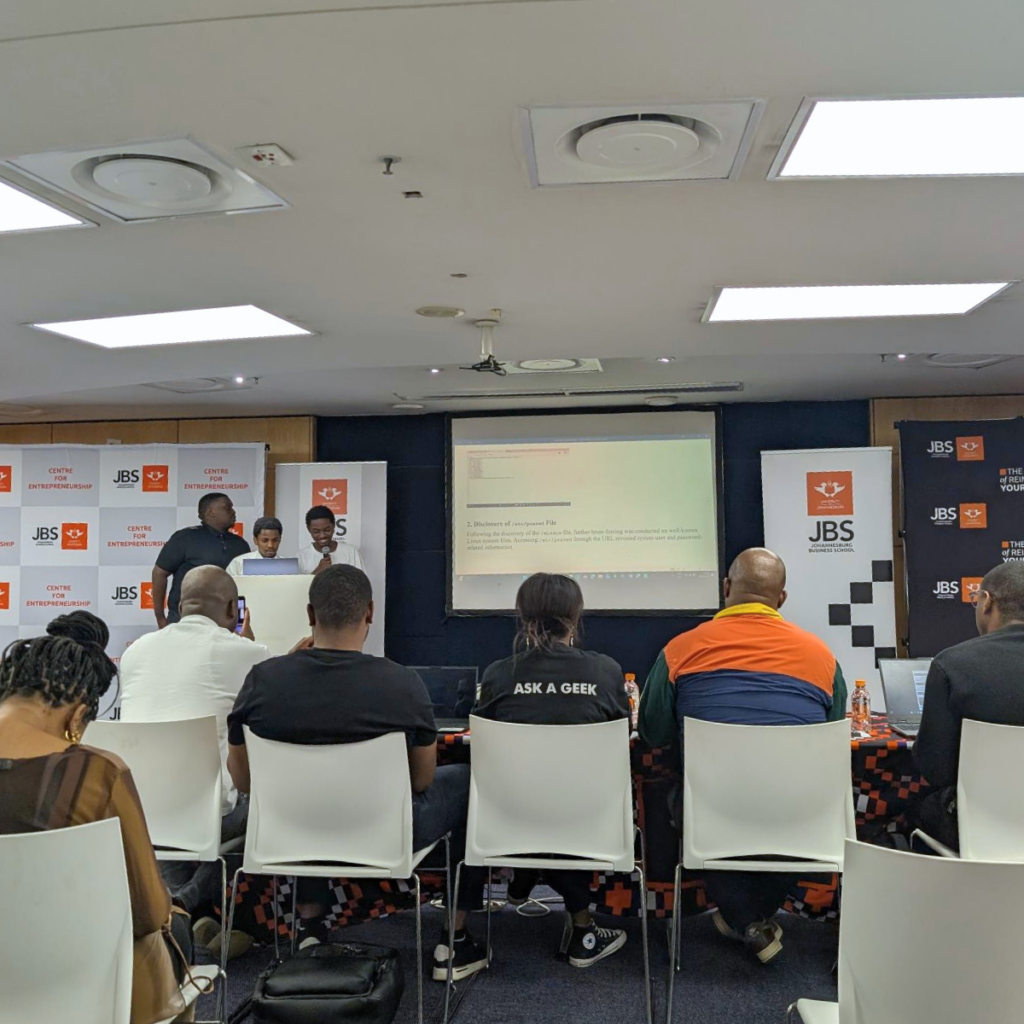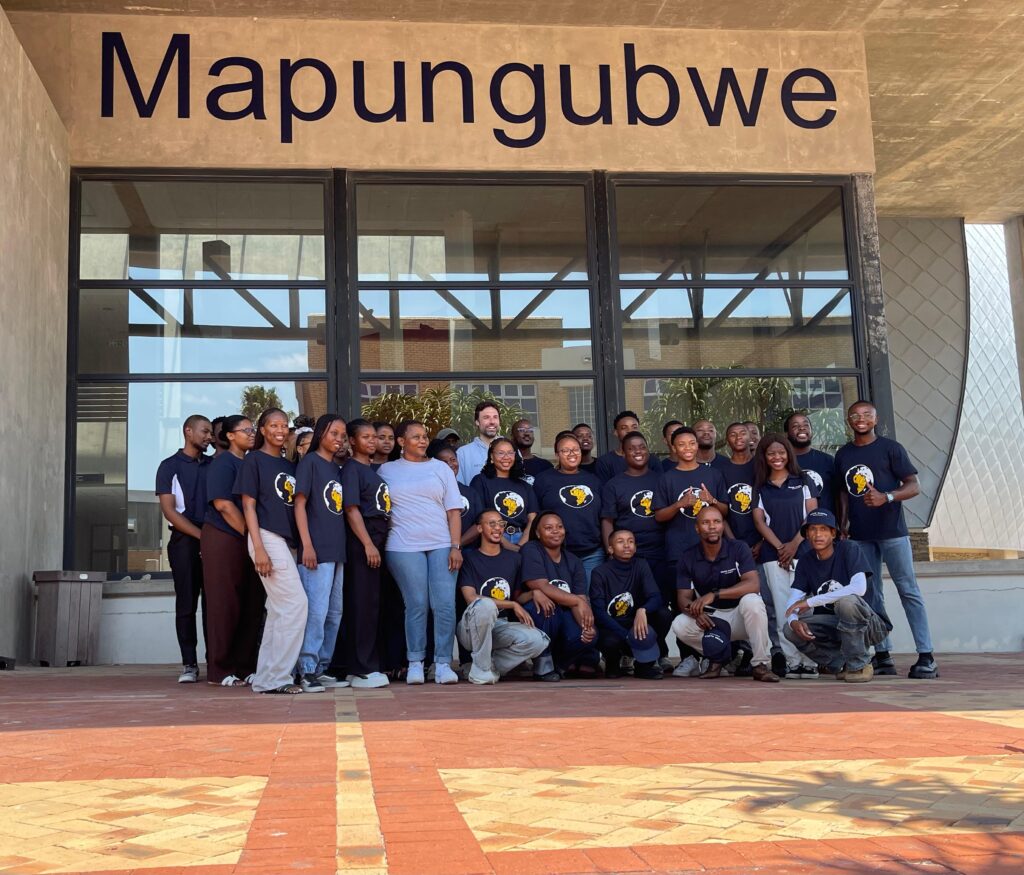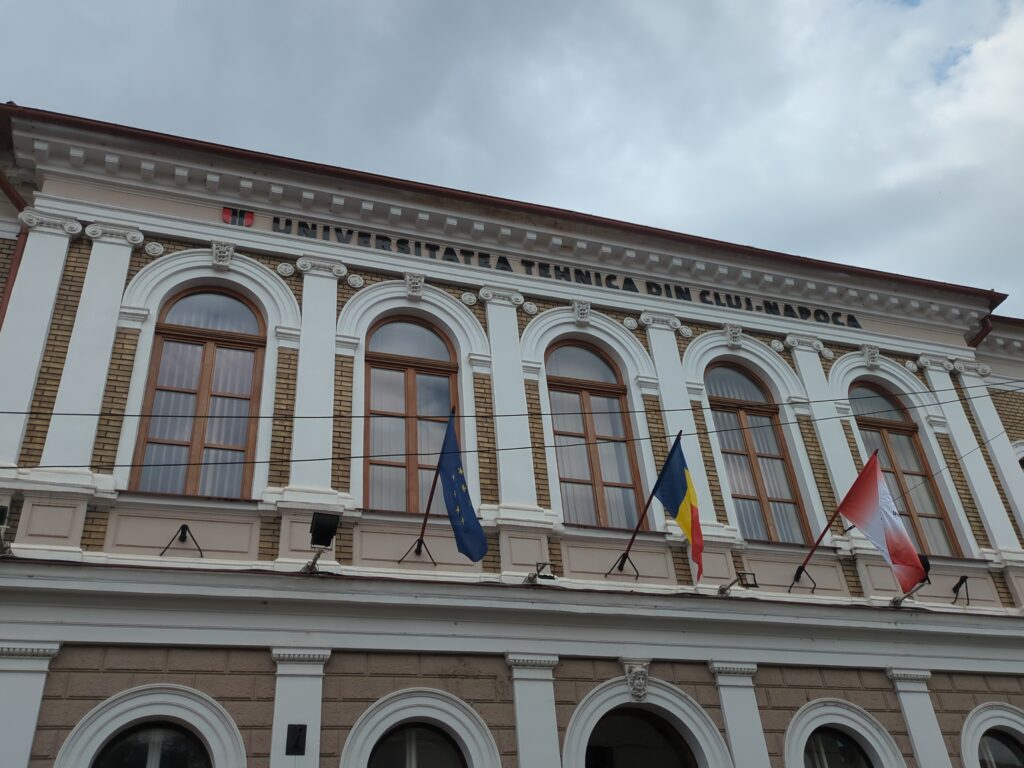
On 30th June, 2025, Virtual Routes Project Officer YuYing Mak visited Romania’s Technical University of Cluj-Napoca (UTCN) to attend the closing event for the first run of UTCN’s Google.org Cybersecurity Seminars program.
The Cybersecurity Seminars program aims to close the skills gap in cybersecurity education by working with universities across Europe, the Middle East, and Africa. The program takes an inclusive approach to student recruitment, centrally including students with diverse backgrounds and skills. It then helps students apply those skills by helping Local Community Organisations (LCOs) with limited capacity or resources for cybersecurity. As Tudor Blaga, Systems Professor at the Faculty of Electronics, Telecommunications and Information Technology at UTCN explained, “the challenge is how to get people that are not working in something that is related to technology to think about security.”
At UTCN, Cybersecurity Seminars combine the expertise of three faculties: Automation, focusing on hardware security and the Internet of Things; Computer Science, examining threats like malware and ransomware; and Communications, addressing topics like awareness, firewalls, and network security. This cross-faculty approach has also been adopted by several other universities in the program, allowing students to draw on multiple departments and varied sources of expertise.
Interest in the first phase of the UTCN Cybersecurity Seminars was high, with over two hundred applicants competing for only 80 places. Prof. Blaga was especially impressed by the level of enthusiasm, highlighting how students were “really interested, really excited, really curious about the project.”
The UTCN program attracted students who may not otherwise have realized their potential cybersecurity talent. Moni, in her final year of her Masters of Telecommunication, “didn’t think about cybersecurity as a career before taking this course.” Justin, a 2nd year computer engineering student, “knew almost nothing about cybersecurity” before starting, concluding that “there’s no chance I’d have considered cybersecurity without the Google.org Cybersecurity Seminars program.”
This diverse recruitment strategy puts students outside their comfort zone. Alex, in his first year of a Communications Master, admitted that “it was scary at first… but I loved it!” A computer‑science first-year student, also named Alex, explained how in the practical exercises “we just needed to figure out what happened – I loved every second of it.” This approach is also new for the instructors; Professor Blaga noted that the Seminars’ focus on practical, hands-on cybersecurity is “refreshing… a really interesting contrast to our normal way of doing things.”
Crucially, UTCN Cybersecurity Seminars prepare students for potential cybersecurity careers. Prof. Blaga emphasized how the program “gives students a story they can tell in interviews – what they taught to LCOs, how they prepared, the challenges they solved.” For Moni, the Seminars “made me more seriously consider cybersecurity as a career path”, while Alex (Communications) is also considering going into the field of cybersecurity after finishing his studies. As Moni concludes, “everybody can find their place in cybersecurity.”